Corridor read
Amazing Staircases Found Indoors
Most staircases are designed simply to connect one floor to another, but every now and then, a staircase comes along that is so extraordinary it becomes a work of art in its own right. Some spectacular staircases can make us feel as though we have stepped into another era, combining architecture, craftsmanship, and dramatic design in unforgettable ways. While remarkable staircases can be difficult to discover, these ten examples are among the most breathtaking in the world.
River Clarke
Temple note
Layer tip
The full corridor digest continues below along soft meter ticks.
Path
Temple Corridor
Most staircases are designed simply to connect one floor to another, but every now and then, a staircase comes along that is so extraordinary it becomes a work of art in its own right. Some spectacular staircases can make us feel as though we have stepped into another era, combining architecture, craftsmanship, and dramatic design in unforgettable ways. While remarkable staircases can be difficult to discover, these ten examples are among the most breathtaking in the world.
1. Lello Bookstore
Located in Porto, Portugal, the Lello Bookstore is famous for much more than its impressive collection of historic books. Often regarded as one of the world's most beautiful bookstores, it features a spectacular spiral staircase that immediately draws the eye.
The staircase combines a dramatic burgundy color with intricately carved wooden details and an elaborate stained-glass ceiling overhead. Together, these elements create an enchanting atmosphere that makes the staircase one of the building's most memorable features.
2. Villa Farnese
It is difficult to believe that this magnificent staircase is part of a private residence. Extending across three floors and surrounded by beautifully crafted decorative stained-glass windows, the staircase is one of the standout architectural features of Villa Farnese in Lazio, Italy.
Built in 1559 for a wealthy Italian nobleman, the staircase is distinguished by its warm golden tones and elaborate craftsmanship. Even more remarkable is the fact that this spectacular staircase is just one of five found throughout the villa.
3. Seaton Delaval Hall
Set amid the scenic countryside of Northumberland, England, Seaton Delaval Hall is home to an elegant spiral staircase that looks as though it belongs in a royal residence.
The house and staircase were originally commissioned for Admiral George Delaval in 1718. Unfortunately, neither Delaval nor the architect lived long enough to see the entire project completed. Afterward, the property was inherited by members of the Delaval family, although they preferred to live elsewhere. As a result, both the mansion and its remarkable staircase remained largely unused for almost 160 years.
4. Oriel Staircase
Does a staircase have to extend all the way to the ground floor to qualify as one? The Oriel Staircase in Chicago offers a fascinating answer. Designed by architect John Root, this unusual staircase runs from the 12th floor down to the 2nd floor rather than reaching the building's base.
Its elaborate decorative patterns and detailed carvings make it particularly impressive. Dark wooden railings stand out dramatically against the surrounding white surfaces, while their reflective qualities help carry natural light toward the building's lower lobby.
5. Palace of Caserta
The grand double staircase inside the Royal Palace of Caserta is so magnificent that the word "palatial" seems almost made for it.
Its enormous proportions immediately command attention, while intricate marble carvings, statues, and elegant off-white walls add to its grandeur. Large windows positioned above the staircase flood the space with natural light, giving the entire area an almost dreamlike and majestic atmosphere.
6. Bramante Staircase
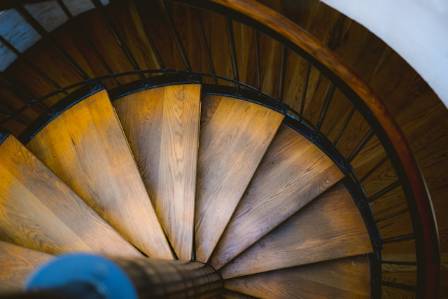
The Bramante Staircase is one of the most recognizable and frequently photographed staircases in the Western world. Located within the Vatican Museum, it serves as one of the site's most distinctive architectural highlights.
The present staircase was created in 1932 by Italian architect Giuseppe Momo. Its unusual design consists of two stairways arranged one above the other, producing a distinctive spiral form reminiscent of a snail shell. Gray steps are paired with a contrasting golden handrail, creating an elegant visual effect.
7. Rubin Museum
The interior of the Rubin Museum in New York City immediately captures attention with its graceful contemporary staircase. The structure was originally designed to impress visitors at Barney's Department Store before eventually finding a new home at the museum.
White marble steps are paired with a refined glass railing, creating a clean and sophisticated appearance. Today, the staircase remains an impressive example of modern architecture and continues to complement the museum's artistic character.
8. Kunsthistorisches Museum
Vienna is known for blending its rich Renaissance and Medieval heritage with a distinctly modern cultural atmosphere. The Kunsthistorisches Museum reflects this combination beautifully, particularly through its magnificent double staircase.
The staircase features pale-colored steps surrounded by soft cream accents. Above it, visitors can admire imposing golden columns and Renaissance paintings, which add a sense of grandeur and historical richness to the space.
9. The Carnegie Museum of Art and Natural History
Pittsburgh may traditionally be associated with its history as a major steel-producing city, but it has also developed into an important center for culture and education. Among its architectural highlights is the impressive staircase inside the Carnegie Museum of Art and Natural History.
This three-story straight staircase features elegant gray-and-white marble steps and a striking brown-and-gold railing. Its scale and refined materials make it one of the most memorable staircases in the city.
10. Winter Palace
Can a staircase ever be too magnificent? After seeing the Winter Palace in Russia, some visitors might be tempted to answer yes. The palace contains one of the world's most lavish and regal staircases, a grand passage once used by figures including Peter the Great, Catherine the Great, and Czar Nicholas II.
The staircase stretches across several levels of the palace and is decorated on an impressive scale. Deep blue Greek-style columns, white and gold marble statues, and elaborate golden details contribute to its extraordinary appearance.
As visitors ascend the staircase, they can also admire a dramatic ceiling mural inspired by the style of St. Peter's Basilica. Every element contributes to an atmosphere of royal extravagance and grandeur.
Final Thoughts
These remarkable staircases demonstrate how much creativity, craftsmanship, time, and technical skill can go into a structure that is often treated simply as a practical part of a building. Each staircase has its own character and reflects the architecture and history of its surroundings, whether it is located inside a bookstore, museum, private residence, or magnificent palace.
Of course, spectacular staircases can be found in many other buildings and homes around the world. They may not all reach the same monumental scale as these examples, but many are equally creative and beautifully designed.
Which of these staircases do you find the most impressive? Is there another extraordinary staircase that deserves a place on this list? If you have a spectacular staircase of your own, share your thoughts and let us know.
More along this corridor
MID · en

Ancient Pyramids Around the World
Egypt is home to more than 100 pyramids, but the Pyramid of Djoser was the earliest of them. It was constructed during the reign of Pharaoh Djoser, from 2630 B.C. to 2611 B.C., as an imposing burial monument for the ruler. Before this period, royal tombs were generally flat-topped mounds constructed primarily from mud. Djoser’s chief architect, Imhotep, introduced a more lasting and visually striking approach with the creation of the step pyramid. The structure consists of six limestone levels, each smaller than the one beneath it, reaching approximately 200 feet into the air. Imhotep was also regarded as a healer and was eventually worshipped in Greco-Roman times as a deity associated with medicine.
MID · en

8 Timeless Traditional Outfits of India
India’s diversity is beautifully woven into its clothing traditions. Each region offers its own unique attire that reflects cultural pride, artistry, and history. These garments are more than just fashion—they are heritage passed from one generation to the next. Let’s explore eight iconic traditional outfits that showcase the country’s vibrant identity.
MID · en

Liquid Calories: Are Liquid Calories Keeping You from Losing Weight?
You've been vigilant about your food intake, yet the scale refuses to budge as you'd like. The culprit might not be in what you're eating but rather in what you're sipping.
MID · en

Ballerina Orchids: Characteristics And Cultivation
The Oncidium orchid group includes more than 400 recognized species and is highly valued by orchid collectors for its graceful flowers and distinctive appearance. Commonly nicknamed the “dancing lady orchid” because of its flower shape, this genus is admired for its beauty, diversity, and ability to adapt to a range of growing conditions.
MID · en

How to Draw a Hot Air Balloon Easily
Looking for a simple way to draw a hot air balloon? You’re in the right place! Whether you’re a complete beginner or helping kids explore creativity, this easy step-by-step tutorial is perfect for all ages.
MID · en

Essential Facts About the Northern Gannet
The Northern Gannet, also known as the Solan or Solan Goose (Sula bassana), is a remarkable avian species inhabiting the Arctic regions, particularly Iceland. These large seabirds typically measure between 80 and 110 centimeters in length and weigh from 2 to 3.5 kilograms. Their geographical range is extensive, spanning the eastern coast of North America down to the Gulf of Mexico, across the Northern Arctic to Western Europe, and reaching the northern shores of Africa. Characterized by white plumage with dark wingtips and a distinctive blue-grey beak, they are currently classified as a species of "Least Concern."