Corridor read
10 Remarkable Types of Rainbows You’ve Probably Never Seen
Most people believe they’ve experienced the full extent of rainbow beauty. While the classic rainbow is always a breathtaking sight, there’s a hidden world of lesser-known variations that can be even more captivating.
Carol
Temple note
Layer tip
The full corridor digest continues below along soft meter ticks.
Path
Temple Corridor
Most people believe they’ve experienced the full extent of rainbow beauty. While the classic rainbow is always a breathtaking sight, there’s a hidden world of lesser-known variations that can be even more captivating.
Primary Arcs
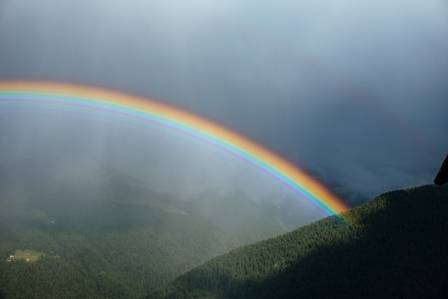
This is the iconic rainbow everyone knows—a vibrant arch appearing after rainfall when sunlight is bent and bounced within droplets in the air. The brilliance of its hues depends largely on the size of the raindrops involved.
Double Bands (Secondary Rainbows)
Often appearing just beyond the main arc, this fainter, wider band is created when sunlight reflects twice within the raindrop before exiting. Its color order is reversed, and it’s about half as bright as the primary rainbow.
Alexander’s Shadow Zone
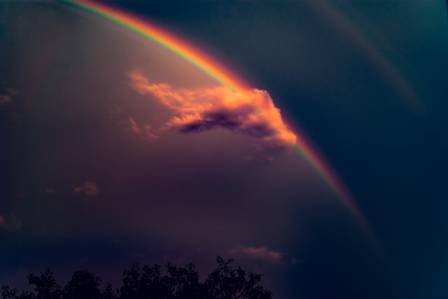
Situated between the primary and secondary rainbows, this noticeably dimmer stretch of sky results from light being redirected away—illuminating areas inside and outside the arcs while leaving this in-between region darker by contrast.
Multiple Fringe Rainbows (Supernumerary Arcs)
These delicate additional bands appear just inside the main arc and are caused by lightwave interference within tiny, similarly sized raindrops. They’re rare and often form in smooth, evenly curved sequences.
Crimson Rainbows
Occasionally, you’ll witness a rainbow washed in deep reds and oranges—typically during sunrise or sunset. In these conditions, the shorter wavelength colors like blue and green scatter out, leaving the longer red tones to dominate.
Fog and Mist Rainbows
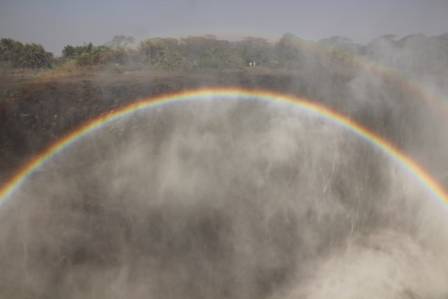
Rather than arising from rainfall, these pale arcs emerge in fog or damp cloud when sunlight interacts with minuscule droplets. Their subtle, ghostly appearance is due to their inability to scatter full-spectrum color. Often wider and whiter, they may show up over oceans, lakes, or even land shrouded in light mist.
Split Rainbows (Twinned Arcs)
Rare and striking, these double arcs seem to share the same starting point but quickly diverge. This effect happens when varying sizes of raindrops—some larger, some smaller—coexist in the same rainfall, causing their own unique light paths and rainbow formation.
Surface-Bounce Rainbows (Reflected and Reflection Types)
These unusual types form only over large water surfaces. A reflected rainbow appears when sunlight bounces off water before reaching the raindrops. A reflection rainbow, less commonly seen, occurs when sunlight reflects off water after passing through the air and interacting with droplets—requiring very precise viewing angles.
Rotating Arc Wheels (Rainbow Wheels)
When thick clouds or heavy rainfall obscure sunlight, a faint circular rainbow may emerge, shaped like a wheel with radial “spokes.” These spokes form from shadows and can seem to spin if the clouds drift quickly across the sky.
Moonlit Rainbows (Lunar Bows)
Rainbows created by moonlight rather than the Sun are called lunar rainbows or moonbows. These faint nighttime arcs require a full moon and falling rain, as well as dark skies. Their colors are typically very muted or even appear white, as moonlight is too dim to stimulate the color-sensitive cells in the human eye.
There’s a whole spectrum of rainbow phenomena waiting to be discovered—proof that even familiar wonders can surprise us when conditions align just right.
More along this corridor
MID · en
16 Nature Plants That Feel Like Magic
The natural world often produces living things that seem to belong in a fantasy story rather than a garden. From flowers that resemble human organs to species that thrive by mimicking the scent of death, nature is full of surprises that can be more chilling than any ghost story. Here is a collection of some of the most unusual and eerie plants found on our planet.
MID · en

The Top 10 Best Golf Courses in the World Every Golfer Should Play
Golf’s most exceptional courses are more than just playing fields—they are living testaments to the sport’s heritage, blending natural beauty with meticulous design. From windswept coastal links in Scotland to immaculately manicured fairways in the United States, these courses offer unforgettable experiences that combine thrilling challenges with awe-inspiring scenery. Here are the top 10 destinations that define golfing excellence.
MID · en

Escape the Urban Hustle: Reconnect with Nature
In the midst of the urban frenzy, there exists an age-old remedy to alleviate stress and anxiety, and rekindle your inner strength: the art of travel. The urban jungle, with its concrete canyons and ceaseless commotion, is a far cry from the serene wonders of the natural world. To immerse yourself in the embrace of tranquility, all you need is a journey that transports you back to the essence of your being.
MID · en
When Do Locust Trees Bloom? And What to Expect
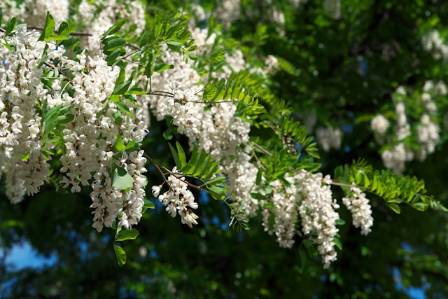
The phrase “locust tree” is commonly used to describe two different species: the Black Locust (Robinia pseudoacacia) and the Honeylocust (Gleditsia triacanthos). Although both belong to the legume (Fabaceae) family, their flowering characteristics are quite different, which often causes confusion. This overview explains when these trees bloom and what their short-lived flowering period looks like.
MID · en

Domestic Robots: Intersectional Approaches
Domestic robots could play an important role in improving people's quality of life by taking care of household chores, offering personal assistance and supporting everyday care needs. However, for these machines to work effectively in real homes, they must be capable of adapting to a wide variety of physical environments as well as different types of users, personal priorities, cultural values and relationships within the household.
MID · en
Traditional Thai Attire: A Guide to Styles, Etiquette, and Acquisition
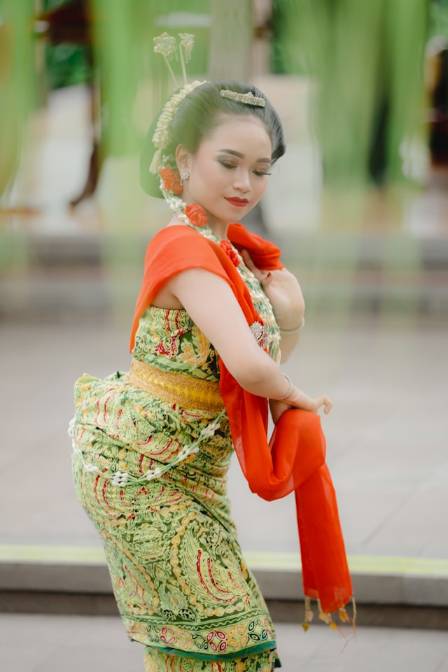
The vibrant spectrum of Thai traditional clothing serves as a profound window into the nation's historical soul and artistic legacy. For travelers exploring the kingdom, understanding the nuances of these garments—from their complex weaves to their cultural symbolism—offers a more intimate connection to the local way of life. These outfits are far more than mere historical relics; they are living expressions of Thai identity that continue to grace modern ceremonies and festivals.