
When was the very first robotic arm invented?

Corridor read

When was the very first robotic arm invented?

In the early stages of developing the mechanical arm, the word “robot” was intentionally avoided.

N

Noah Bennett

Temple note

Layer tip

The full corridor digest continues below along soft meter ticks.

Path

Temple Corridor

In the early stages of developing the mechanical arm, the word “robot” was intentionally avoided. At the time, the term carried a sense of fiction and cinematic fantasy, and engineers feared these associations might slow public acceptance. As automation matured and society grew more comfortable with advanced machinery, the label “robot” gradually became standard within the industry.
This article explores the origins of robotic arms and examines how they have progressed since their earliest prototypes.

Early Concepts of Robots and Mechanical Arms
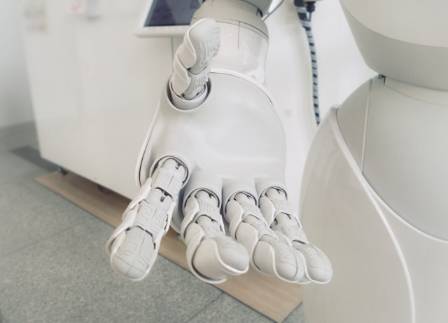
The modern idea of a robot—a machine capable of imitating human reasoning or movement to achieve tasks—did not appear overnight. Instead, it developed through centuries of ideas, prototypes, and conceptual leaps.
Several historical stages significantly contributed to the formation of what we now call a “robot”:
As early as 322 BC, Aristotle speculated in Politics that self-operating devices could one day eliminate the need for slavery by reducing human labor.
Around 1495, Leonardo da Vinci sketched out designs for an automated mechanical figure, one of the earliest examples of humanlike machinery.
In the 18th century, French inventor Jacques de Vaucanson created an automated duck capable of imitating natural movements.
During the 19th century, Japanese artisan Hisashige Tanaka engineered intricate mechanical dolls capable of performing simple programmed motions.
The first attempts at industrial robots appeared in the United States in the 1930s. Inventors there began designing mechanical manipulators whose articulated joints were modeled after the human shoulder, arm, and wrist. These machines were intended to mimic repetitive actions such as lifting, pushing, and pressing. In 1938, Willard V. Pollard filed the earliest recorded patent for a motorized arm, which he described as a “Position Controlling Apparatus.”
A major breakthrough came in 1954 when George Devol created the first programmable, digitally controlled robot: the Unimate. This machine laid the groundwork for modern robotics, and by 1960, General Motors purchased the first commercial unit.

When and Why the First Robot Arm Was Invented
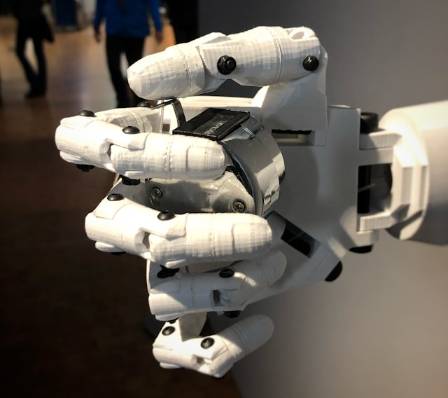
In 1962, George Devol and Joseph Engelberger founded Unimation—short for “universal automation”—the world’s first robotics company. Their flagship product, the Unimate robotic arm, soon became the first industrial robot to achieve commercial success. Designed initially for automobile manufacturing, the Unimate was able to assist with welding, material handling, and other repetitive production tasks.
As factories sought safer and more efficient ways to automate labor-intensive activities, the Unimate quickly found its place. Automakers were early adopters, using the robotic arm to streamline assembly lines and reduce worker exposure to hazardous conditions. Its usefulness later expanded into electronics, metalworking, and food processing, where speed and precise repetition were essential.

Features of the First Industrial Robotic Arm

The Unimate consisted of a multi-jointed arm fitted with a gripping mechanism. Its programming allowed it to carry out operations such as lifting, positioning, and assembling parts. The system featured a three-axis arm capable of handling objects weighing up to 226 kilograms. With hydraulic actuators powering its movements, the robot could apply steady force thanks to the consistent pressure of hydraulic fluid (Inst Tools, 2019).
This groundbreaking invention introduced unprecedented efficiency in material handling and welding tasks. Yet it also sparked controversy. While the robot reduced workplace hazards and improved production reliability, it also raised fears about job displacement. Because of these concerns, early adoption was slow as businesses hesitated to fully embrace robotic automation.

More along this corridor

MD

MID · en

Top 5 Hall of Fame Pool Players: Legends Who Redefined the Game

Top 5 Hall of Fame Pool Players: Legends Who Redefined the Game

These iconic athletes are celebrated not only for their unmatched skill and trophy-laden careers but also for the indelible mark they left on professional pool. From the Filipino prodigy Efren Reyes to the trailblazing Allison Fisher, their legacies have inspired enthusiasts of all backgrounds to step up to the table and test their mettle.

MD

MID · en

A bird flying close to the water's surface

A bird flying close to the water's surface

Pacific Coast brown pelicans form breeding colonies from Baja California northward to California’s Channel Islands, with nesting activity occurring mainly during winter and spring. Once the breeding season ends, many birds migrate north. A small number remain visible in Monterey Bay throughout the year, but most individuals arrive during summer and remain in the area until early autumn.

MD

MID · en

5 Secrets to Polished Casual Outfits

5 Secrets to Polished Casual Outfits

What’s the most common occasion I style clients for? It’s not loungewear for home, job interviews, formal offices, or fancy weddings/parties. It’s their everyday life—Monday to Friday, plus casual weekends. That’s why I’m sharing 5 secrets to crafting stylish, polished casual outfits that let you feel put-together in your day-to-day.

MD

MID · en

Fascinating Facts About One of America’s Favorite Birds

Fascinating Facts About One of America’s Favorite Birds

The American Robin (Turdus migratorius) is one of the most familiar birds in North America. Its reddish-orange breast makes it particularly easy to identify, even for people who are new to birdwatching. These birds are generally comfortable around people and are frequently found building nests and searching for food in urban and suburban areas.

MD

MID · en

Now Blooming In the Nursery: Andromeda

Now Blooming In the Nursery: Andromeda

Andromeda is one of the first shrubs to produce flowers in spring, offering a graceful and eye-catching display that deserves a closer look. The individual blooms resemble lily of the valley, but instead of appearing alone, they grow together in large hanging clusters along layered branches. Each flower cluster can reach up to 6 inches in length. Many varieties produce a pleasant fragrance, creating a sparkling effect in the early spring garden. Depending on the cultivar, the flowers may appear in shades of white, soft pink or deep rose.

MD

MID · en

The Incredible World Of 3D Street Art

The Incredible World Of 3D Street Art

An amazing look at the world's most mindblowing 3D street art and graffiti.3D street art — also called pavement art, chalk art, or sidewalk murals — is a striking form of anamorphic artwork popularized by American artist Kurt Wenner.