Corridor read
3D Street Art: The Ultimate 2026 Marketing Guide
While 3D street art has existed in various forms for centuries, the last three decades have seen it transform into a high-impact commercial tool. Brands leverage this medium to bypass traditional advertising fatigue, creating immersive experiences that turn passive observers into active participants. This guide explores the mechanics, history, and strategic implementation of 3D street art in modern marketing campaigns.
Lauren Mitchell
Temple note
Layer tip
The full corridor digest continues below along soft meter ticks.
Path
Temple Corridor
While 3D street art has existed in various forms for centuries, the last three decades have seen it transform into a high-impact commercial tool. Brands leverage this medium to bypass traditional advertising fatigue, creating immersive experiences that turn passive observers into active participants. This guide explores the mechanics, history, and strategic implementation of 3D street art in modern marketing campaigns.
Understanding 3D Street Art
3D street art, also referred to as anamorphic art or 3D pavement illusions, utilizes a specific mathematical perspective to create a "trick of the eye" (trompe-l’œil). When viewed from a designated vantage point, a two-dimensional image on the ground or wall appears to possess realistic depth or height. Common illusions include massive chasms opening in the sidewalk or solid objects appearing to float above the pavement.
The primary appeal of this medium lies in its interactivity. Often, the illusion is most effective when viewed through a digital lens. While the naked eye can perceive the intent, the image "pops" into three dimensions specifically on a smartphone screen. This creates a "wow moment" that naturally encourages spectators to take photos and share them on social media, providing brands with significant organic reach.
The Evolution of the Craft
The origins of forced perspective can be traced back to Ancient Greece and was later refined during the Renaissance by Italian masters like Andrea Mantegna. These artists used "foreshortening" to make flat ceilings appear as vast, open architectural spaces. In the theatrical world, the 1585 Teatro Olimpico utilized similar techniques to make stage sets appear much deeper than their physical footprint.
Modern street painting grew out of the "Screever" tradition in 19th-century Britain. By 1890, London alone hosted over 500 pavement artists who combined detailed chalk drawings with moral proverbs or social commentary. In the 1980s, Kurt Wenner—a former NASA illustrator—merged mathematical precision with fine art to create the modern 3D pavement style. He pioneered the practice of painting on portable media like canvas or vinyl, allowing the art to be moved and installed at specific event locations.
The Science of Optical Illusions
Our brains interpret depth by comparing the relative sizes of objects; things further away look smaller and less defined. 3D street artists invert these rules. By painting distant objects larger and using sharper lines in the background while keeping the foreground softer, they confuse the viewer's spatial perception.
Artists typically employ one of two technical methods:
-
The Grid Method: Stretching a reference image across a mathematical grid to ensure the distortion is perfectly calculated for the intended viewing angle.
-
Projection: Using a projector placed at the final viewing point to cast an image onto the ground, which the artist then traces to ensure perfect alignment with the camera's perspective.
Strategic Implementation for Brands
Businesses utilize 3D street art to meet several key marketing objectives, including product launches, brand awareness, and experiential sampling. The medium offers a friendly, non-intrusive way to engage consumers. Rather than pushing a sales pitch, the brand provides entertainment, which fosters positive sentiment.
The return on investment (ROI) is maximized through "earned media." When a consumer takes a selfie with a 3D illusion and posts it to social media, the brand's message is delivered to a wider audience through a trusted source. High-quality illusions frequently attract traditional press coverage from newspapers and television stations looking for visually interesting local stories.
Best Practices and Campaign Measurement
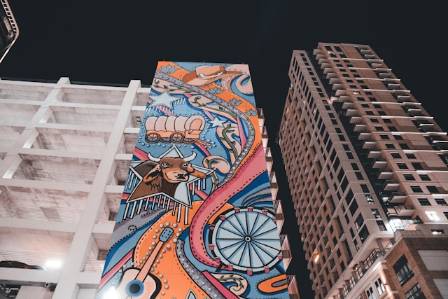
To ensure a successful campaign, brands should focus on the "90/10 Rule": 90% entertainment and 10% branding. An overly corporate image will be ignored, whereas a fun, interactive scene that incorporates subtle branding will be widely shared. Location is also critical; high-footfall areas where people have "dwell time"—such as shopping centers, train stations, or cinema lobbies—perform best.
Effectiveness is measured through several metrics:
-
Social Reach: Tracking hashtags and mentions to calculate total impressions.
-
Engagement: Counting the number of people who stop to interact with the art.
-
PR Value: Estimating the Advertising Value Equivalency (AVE) of any resulting news coverage.
-
Advanced Tracking: Utilizing technology such as computer vision to measure dwell time and emotional response from passersby.
Technical Specifications and Logistics
For an effective illusion, the minimum recommended size is 6 meters long by 3 meters wide. Because the effect requires stretching the image, 3D artwork is almost always significantly longer than it is wide. While it can be painted directly on site, most commercial campaigns use heavy-duty floor vinyl. This allows the art to be produced in a studio and installed quickly at multiple locations without damaging the original pavement.
In terms of demographics and reach, experiential campaigns of this nature often see diverse engagement. According to marketing data, high-footfall urban locations can result in over 100,000 physical impressions over a single weekend, with social media amplification potentially reaching millions. For example, a campaign for a national organization in the UK reached an estimated 6 million social media impressions within 30 days, generating over £100,000 in equivalent advertising value.
Campaign Costs and Execution
A standard professional 3D street art campaign generally starts around £6,995 (plus taxes). This typically covers the creation of the bespoke artwork on reusable vinyl, concept sketches, and a time-lapse film of the production process. The process usually begins with a client brief and progresses through several hand-drawn concepts before the final painting commences.
More along this corridor
MID · en

World Most Beautiful Beaches
Creating a top five list of the world’s most beautiful beaches is naturally a very personal choice, since everyone has different ideas about what makes a beach truly special.
MID · en

Fiddle Leaf Fig Houseplant
The name “Fiddle Leaf Fig” is sometimes used for two different plants: Ficus lyrata and Philodendron bipennifolium. It is common for one popular name to describe more than one species, and this is one such example. The care information below focuses on Ficus lyrata, the plant most often sold in garden centers and stores as a Fiddle Leaf Fig houseplant.
MID · en
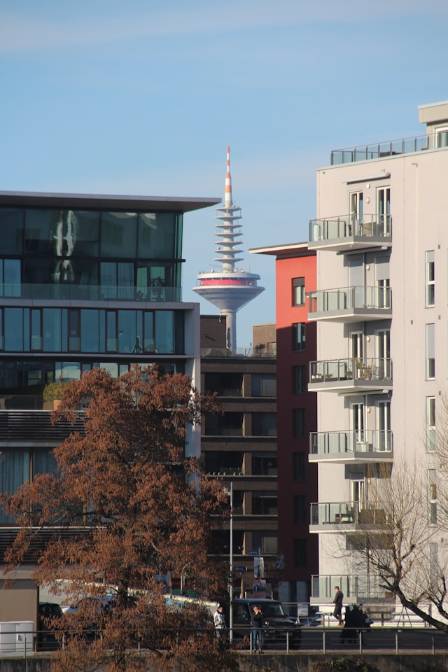
The Europaturm in Frankfurt
Standing tall in the heart of Frankfurt, the Europaturm is one of the city’s most recognizable landmarks. Often referred to as the "European Tower," this impressive structure dominates the skyline and serves as a key telecommunications hub. Its unique design and historical significance make it a point of interest for both locals and visitors.
MID · en

8 Health Benefits of Mint
Mint is a fragrant herb loved for its refreshing flavor and cooling sensation. It is widely used in cooking, drinks, and traditional remedies. Besides adding a pleasant taste to foods and beverages, mint may also provide several health advantages, including supporting digestion, enhancing mental performance, and helping reduce unpleasant breath.
MID · en
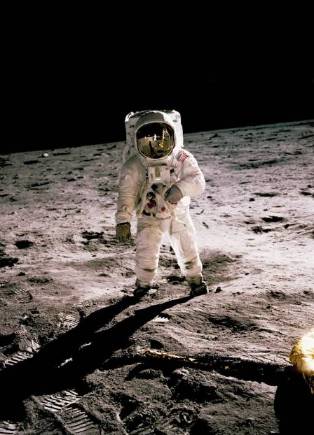
Essentials of Spacewalk Spacesuits
Spacesuits transcend mere apparel for astronauts; they are intricate systems tailored to diverse mission needs. The realm of space exploration employs two distinct types of spacesuits, each serving a unique purpose. While one is worn within a spacecraft during launch, ascent, re-entry, and landing, the focus here is on the spacesuit crafted explicitly for spacewalks, often termed an Extra-Vehicular Activity (EVA) suit by NASA.
MID · en

Top 8 Benefits of Yoga
If you’ve rolled out your mat and stretched into a pose today, chances are you already feel calmer. Whether you’re a complete beginner or a seasoned practitioner, consistent yoga practice can make you feel stronger, lighter, and more centered. What’s more, yoga isn’t just about bending and stretching—it’s a holistic tool that can support both body and mind, and even complement medical treatments during recovery or chronic illness.