Corridor read
Agricultural Robots Bringing Food to the Table
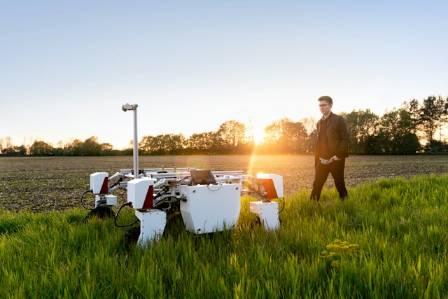
Agriculture is steadily becoming more automated. The shift initially focused on autonomous tractors equipped with sensors and software that allowed them to operate continuously throughout the day and night. Today, the technology has expanded into a wide variety of agricultural robots equipped with increasingly sophisticated sensors, software, lasers, and specialized gripping mechanisms. These machines can harvest crops, remove weeds, control pests, and perform many other demanding jobs. Here are five emerging agricultural robots currently working on farms across the country.
Elsin Veyne
Temple note
Layer tip
The full corridor digest continues below along soft meter ticks.
Path
Temple Corridor
Agriculture is steadily becoming more automated. The shift initially focused on autonomous tractors equipped with sensors and software that allowed them to operate continuously throughout the day and night. Today, the technology has expanded into a wide variety of agricultural robots equipped with increasingly sophisticated sensors, software, lasers, and specialized gripping mechanisms. These machines can harvest crops, remove weeds, control pests, and perform many other demanding jobs. Here are five emerging agricultural robots currently working on farms across the country.
Farming is fundamentally about growing living things, but it also involves removing unwanted forms of life. Weed control is one of the most exhausting and frustrating responsibilities for farmers and gardeners alike. A growing number of robots are now capable of handling this difficult work, including Carbon Robotics’ Laserweeder. The machine is equipped with powerful lighting and a dozen high-resolution cameras that examine crop rows as the robot travels through the field.
Carbon Robotics Laserweeder
An artificial intelligence system analyzes the plants within milliseconds, distinguishing crops from unwanted weeds. Once a weed has been identified, 150 carbon-dioxide lasers rapidly target the unwanted growth, firing as frequently as once every 50 milliseconds.
The machine can eliminate as many as 200,000 weeds per hour and destroy approximately 99 percent of the weeds it encounters. This level of productivity can benefit both farmers and the environment by significantly reducing the need for chemical herbicides.
Harvest CROO Strawberry Picker
Anyone who has purchased a box of strawberries has probably encountered an inconsistent mixture of fruit. Some berries may be bruised, others may already be covered in mold, while others are perfectly ripe and ready to eat. The Harvest CROO could eventually help reduce this variation by automating the process of selecting ripe strawberries.
From a distance, the machine resembles a large tour bus designed for an electronic music group. However, as it moves along rows of strawberry plants, an onboard vision system examines individual berries and determines within milliseconds which ones are ready to harvest.
Sixteen robotic units inside the harvester then collect the ripe strawberries using soft, delicate grippers. External lidar systems help the machine navigate along the crop rows, allowing it to avoid damaging plants and to steer clear of people who may be working nearby.
Polly the Pollinating Robot
Some fruit-producing plants have separate male and female flowers, meaning pollen must be transferred from the male flower to the female one before fruit can develop. Cucumbers and squash are examples of plants that depend on this process. Other plants, including tomatoes and blueberries, contain both male and female reproductive structures within the same flower and only require vibration to release and transfer pollen.
Bumblebees are normally important pollinators for these crops, but their populations have been declining. People can perform pollination manually, but doing so requires considerable labor because individual flowers must be handled one by one. Polly, a robotic pollinator, is designed to automate this task.
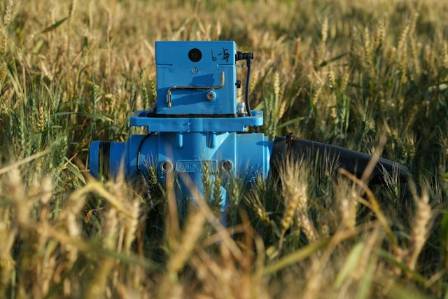
Developed by Israeli company Arugga, the compact robot travels between crop rows while scanning the plants around it. Its artificial intelligence can identify flowers and determine which ones are ready to receive pollen.
Once a suitable flower is detected, Polly releases a short burst of air that shakes the flower and initiates the pollination process that can eventually result in fruit. Unlike bumblebees, the robot can operate under temperatures and lighting conditions that are unfavorable to the insects. This allows it to perform pollination work under circumstances where both natural pollinators and human workers may be less effective.
Naio Technologies Oz
Smaller farms generally cannot dedicate a separate robot to every agricultural task, such as planting, cultivating, weeding, or harvesting. To address this need, French company Naio Technologies developed Oz, a compact multipurpose agricultural robot.
The fully electric machine weighs only about 330 pounds and stands approximately 33 inches tall. It uses RTK GPS guidance, allowing it to navigate with accuracy down to roughly one centimeter.
Oz essentially functions as a small autonomous tractor. It can handle tasks including weeding, planting, creating furrows, hoeing, and transporting materials, and it can operate for as long as eight hours at a time.
There are currently around 220 Oz robots operating across 48 countries. Together, they have accumulated approximately 36,000 hours of agricultural work. Its versatility allows commercial growers and smaller operations to use a single autonomous machine for a range of different field tasks.
TerraClear Rock Picker
Before people or machines can begin cultivating a field, the land often needs to be cleared of rocks. Stones can interfere with plant growth and potentially damage agricultural machinery. Traditionally, removing rocks has required substantial manual labor, but TerraClear has developed both digital and physical technology designed to make the process more efficient.
The first stage involves a drone equipped with neural-network-based software. It surveys the field and identifies the location and size of individual rocks, creating a detailed map showing where the stones are located.
The robotic Rock Picker then uses three belt-driven fingers to lift rocks from the soil and place them into a collection scoop. TerraClear is continuing to develop the technology with the goal of eventually making the entire rock-removal process fully autonomous.
More along this corridor
MID · en
What is inside a Japanese bento box?
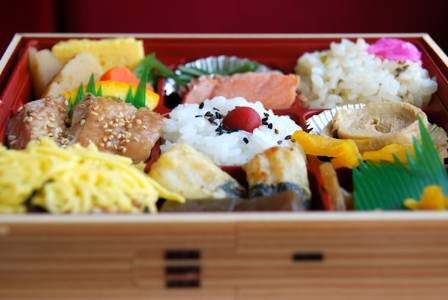
Bento boxes are an important part of Japanese culinary tradition and can be found throughout Japan in countless styles, ranging from convenient store-bought meals to carefully crafted handmade creations.
MID · en
How to Create Needle-Felted Animals: A Basic Guide
If you’ve ever wondered what needle-felted animals have in common with dollhouses and miniatures, the answer is a lot! Tiny needle-felted creatures are an essential part of the miniature world and are absolutely captivating to see.
MID · en

How to Draw a Hot Air Balloon Easily
Looking for a simple way to draw a hot air balloon? You’re in the right place! Whether you’re a complete beginner or helping kids explore creativity, this easy step-by-step tutorial is perfect for all ages.
MID · en

Penjing Bonsai: A Timeless Art of Miniature Landscapes
Penjing, also known as penzai, is an ancient Chinese art form that transcends mere horticulture, evolving into a profound expression of human reverence for nature through the creation of intricate miniature landscape scenes. Unlike conventional potted plants, penjing is a living artwork where artists and caretakers meticulously prune, shape, and nurture living plants to convey a spectrum of emotions, from serene tranquility to whimsical wonder. These miniature landscapes often incorporate carefully selected natural elements like rocks and moss, as well as tiny figurines such as horses, people, or houses, weaving a dream-like narrative that mirrors the grandeur of the natural world in a confined space. At its core, penjing is not just about replicating nature; it is about embodying the fundamental principles that govern the growth, balance, and harmony of the natural ecosystem. In modern times, indoor penjing and bonsai trees have become beloved additions to homes and offices worldwide, not only for their aesthetic appeal but also for their ability to infuse spaces with a sense of peace and tranquility. Beyond their visual charm, these miniature trees contribute to improving indoor air quality, filtering out toxins and releasing fresh oxygen. With proper care, patience, and attention to their unique needs, an indoor penjing can thrive for decades, even centuries, becoming a cherished legacy that brings joy and beauty to generations of enthusiasts.
MID · en

Golden Hours: 7 Cities That Paint the Sky With Breathtaking Sunsets
Few natural spectacles rival the magic of a stunning sunset, when the sky transforms into a canvas of fiery oranges, soft pinks, and deep purples. Across the globe, certain cities are blessed with the perfect conditions to create these unforgettable moments. Whether it’s the reflection over water, silhouettes of iconic landmarks, or unique atmospheric conditions, these destinations offer some of the most breathtaking sunset views in the world.
MID · en

Fairies in the Deep, Dark Forest
At The Vivid Eye, the aim is to reach many kinds of readers, and it felt like the right moment to focus on a painting that could especially captivate children. With a style and mood reminiscent of illustrated storybooks, Fairies in a Bird’s Nest sparks the imagination of anyone familiar with the enchanted worlds of Peter Pan, Alice in Wonderland, Where the Wild Things Are, or the tricksters and sprites found in Grimm fairy tales. This painting was chosen with the help of a young companion during a museum visit, and its discovery was unexpected: a playful, moonlit gathering of magical beings hidden among otherwise solemn portraits and landscapes in a grand museum setting.